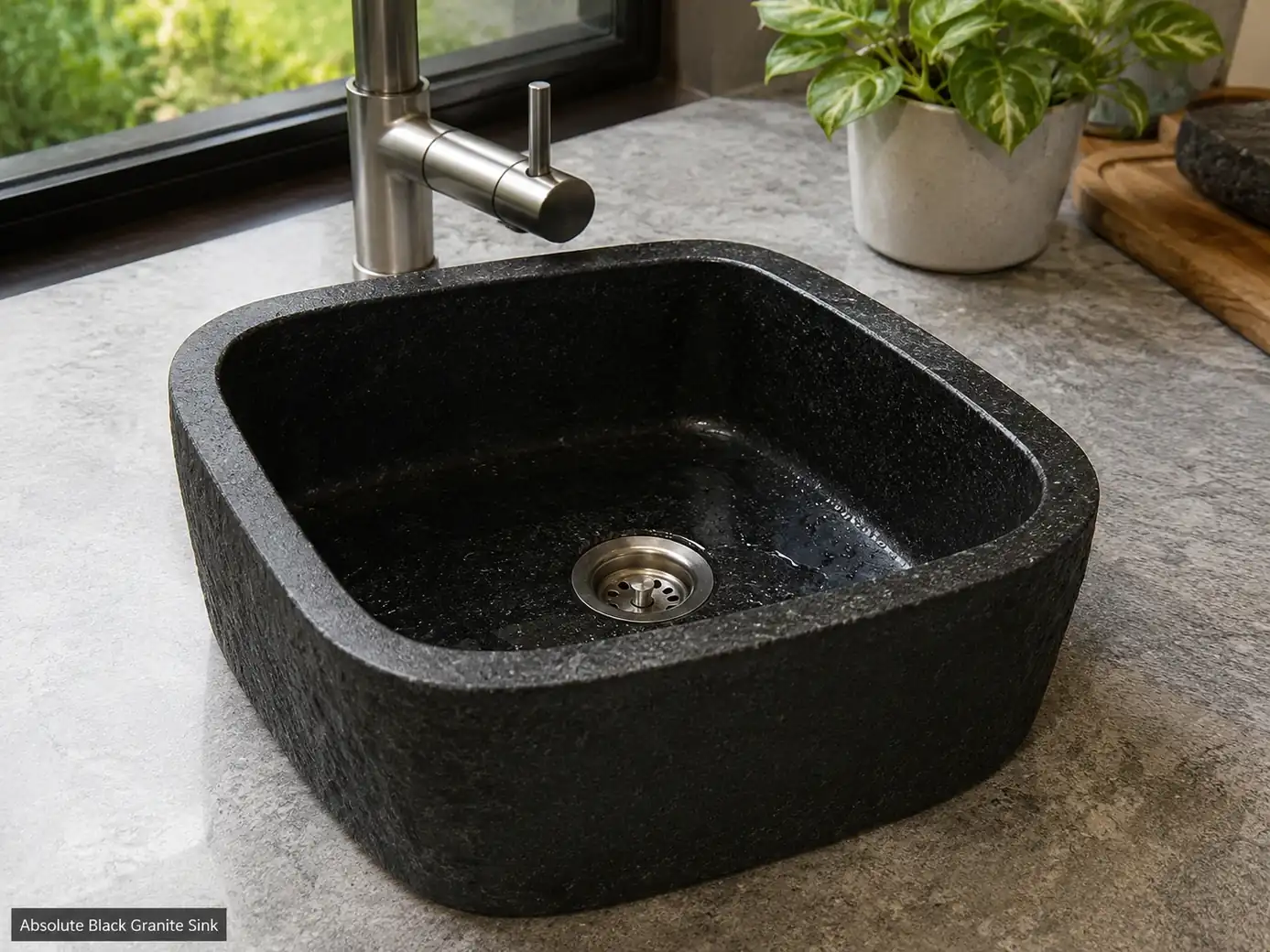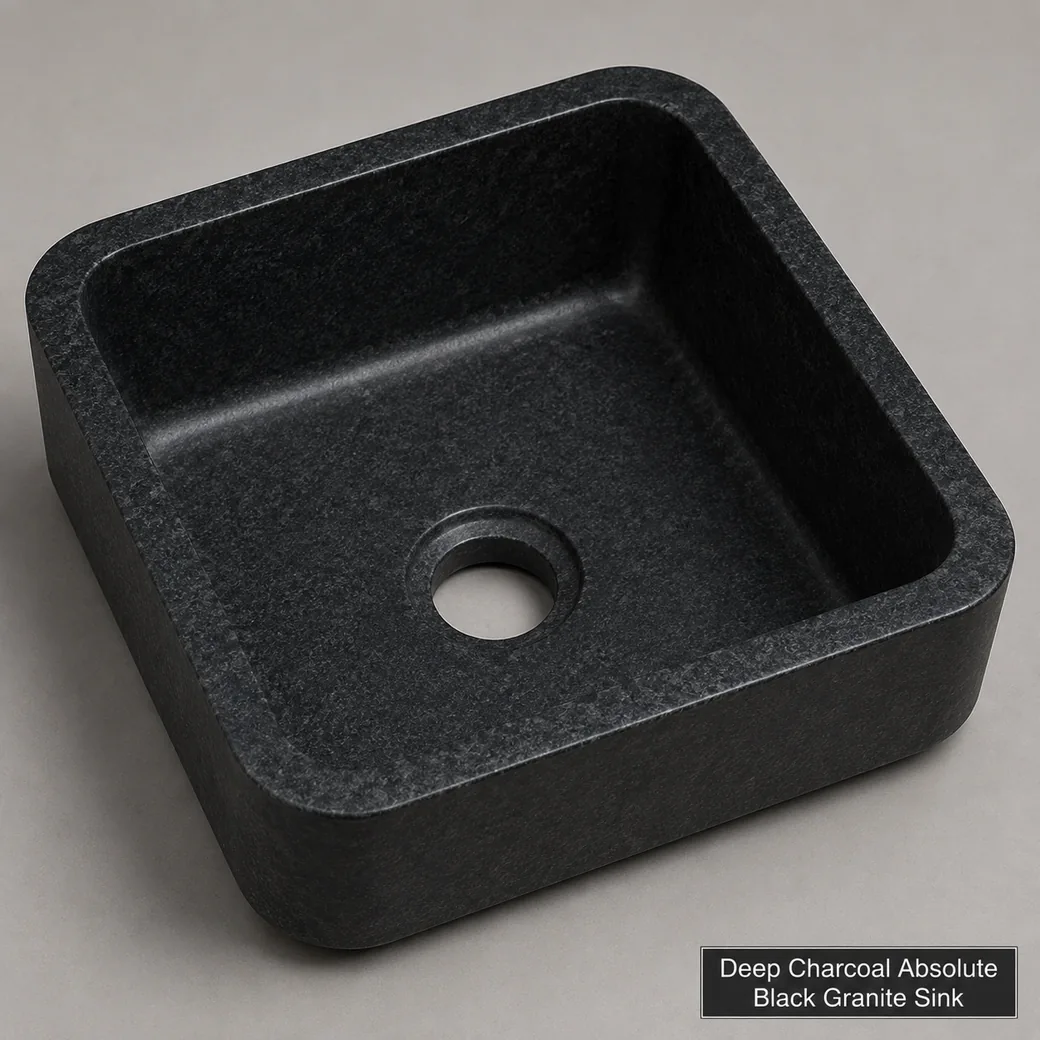
A granite composite sink is an engineered product made from stone mineral particles blended with resin; it is not the same as a sink carved from a solid granite block. Composite versions are durable, relatively heat resistant and nonporous, while natural stone sinks vary by quarry and may need sealing. Compared with stainless steel, granite composite is heavier and quieter but less forgiving of some cleaners. Use mild dish soap and non-abrasive tools.
Granite Basin Performance
Granite Sink Small
Secure product inquiry
Buy now
Cash on delivery available. Product details are pre-filled below. Owner delivery adds AED 5,000.
Solid Stone vs Composite
Choosing the Right Granite Basin Construction
This product is a natural granite basin, which should be distinguished from the much more common granite-composite sink category. Composite sinks typically combine mineral aggregate with resin and are nonporous, while a carved natural granite basin has different sealing and fabrication requirements. Mounting method, drain position and cabinet support should therefore be specified around the actual solid-stone construction rather than composite-sink assumptions.
Natural vs Composite Basin
Black Granite Sink Construction Explained
A Black Granite Sink carved from natural Absolute Black Granite is fundamentally different from an engineered granite-composite sink. A natural version is cut or formed from actual stone, so its mineral structure, density and subtle variation belong to the original granite itself. Granite-composite sinks instead combine crushed or ground mineral aggregate with resin binders and are molded into shape as an engineered material. The two may look similarly dark and substantial, but one is genuine carved stone while the other is a manufactured composite designed to reproduce selected granite-like qualities.
Mounting & Bowl Design
Granite Kitchen Sink Installation Formats
The 35.6 × 35.6 × 15.2 cm natural-granite sink weighs 16.5 kg and should be treated differently from common resin-bound granite-composite sinks. A solid stone basin requires support suited to its individual weight and fabrication geometry, whereas composite models are frequently engineered specifically for undermount, topmount or dual-mount installation; the mounting format should therefore be confirmed from the actual sink construction rather than assumed from the word “granite.”
Granite Composite Sink vs Solid Stone Basin
This basin uses solid natural Absolute Black Granite rather than resin-bound granite composite, giving genuine mineral variation but potentially different sealing requirements.
Undermount Black Granite Sink Planning
The 16.5 kg natural granite basin needs continuous level support or properly engineered mounting so its weight is not carried only by the drain connection.
Granite Basin Cabinet and Drain Requirements
Confirm cabinet width, internal support and plumbing clearance around the 35.6 cm basin so its 16.5 kg stone body fits without loading weak cabinet edges.
Product Overview
Natural Black Granite Basin Product Details
This basin is specifically described as Natural Absolute Black Granite, not granite composite, with a honed deep charcoal-black finish. It measures 35.6 × 35.6 × 15.2 cm and weighs 16.5 kg; exact drain-hole dimensions and mounting method are not specified and must match the selected plumbing and support system.
| Drain Opening Diameter | Ø90 mm / 3.5 in drain opening |
|---|---|
| Overflow Provision | No overflow as standard; Ø90 mm outlet configured for a kitchen-style basket waste unless an overflow is custom fabricated |
| Faucet Hole Provision | No pre-drilled faucet hole; faucet drilling to the selected tap template, with Ø35 mm as the standard single-hole provision |
| Mounting Style | Undermount installation with concealed stainless-steel support brackets independent of the adhesive bond |
| Bowl Corner Radius | Minimum R25 mm internal bowl-corner radius for drainage, cleaning access and reduced stress concentration |
| Internal Drainage Slope | Continuous minimum 2% bowl-floor slope toward the waste outlet |
| Underside Support Area | Minimum 50 mm-wide continuous support ledge beneath the sink perimeter, supplemented by independent stainless-steel brackets |
| Plumbing Clearance | Minimum 200 mm clear vertical space and 150 mm clear width beneath the waste outlet for trap and connection servicing |
| Rim Profile | R5 mm eased rim profile around the sink opening and exposed upper perimeter |
| Strainer Compatibility | Ø90 mm waste opening compatible with a standard 3½-inch kitchen-sink basket strainer; final cut to the selected waste assembly |
Cleaning & Performance
Maintaining a Solid Granite Bathroom or Kitchen Sink
Natural granite sinks may require impregnation depending on the stone’s absorption and should be cleaned with mild soap or pH-neutral stone cleaner. Avoid abrasive powders and aggressive chemicals, and do not describe the sink as automatically nonporous based on claims made for manufactured granite-composite products.
Material Clarity
Why Choose a Natural Granite Vessel Sink
A natural granite vessel sink provides four factual benefits: solid stone creates a substantial freestanding basin form, granite offers good everyday durability, custom dimensions can be coordinated with the countertop and tap position, and the honed surface gives a softer appearance than polished stone. Because natural granite varies by quarry, sealing requirements should be assessed for the actual basin rather than assumed.
- Solid Natural Stone
The basin is formed from natural granite stone rather than a lightweight composite or resin-based imitation.
- Dense Honed Surface
The honed granite surface provides a dense, low-sheen basin finish with a softer appearance than polished black stone.
- Heavy Stable Basin
The 16.5 kg stone basin provides substantial stability on a properly engineered countertop or support structure.
- Custom Drain Machining
The drain opening can be custom machined to match the selected waste fitting and plumbing position rather than relying on a generic size.
Custom Basin Work
Custom Black Granite Sink Options
A custom black granite sink can be fabricated around the required bowl length, width and depth, with drain position established from the plumbing plan before machining. Countertop, undermount or other mounting formats should be coordinated with edge treatment, faucet reach, stone selection and the engineered support beneath the 16.5 kg basin; detailed dimensional coordination of this kind is comparable to working from a reception desk revit family during architectural planning.

Technical Reference
Absolute Black Granite Sink Specifications
Use the sink specification table to verify whether the product is natural stone or composite before comparing maintenance or installation requirements. Drain, mounting, sealing and support fields then help your installer prepare the cabinet or countertop correctly for the actual sink construction.
Product details
Specifications, care, delivery and FAQ
Everything is rendered from product JSON fields so the page remains SEO-ready even before JavaScript runs.
Cleaning: Rinse food and soap residue after use, clean with pH-neutral stone cleaner and a soft nylon brush, wipe around the drain and corners, rinse thoroughly and towel-dry to limit mineral marks, use only granite-safe scale removers, avoid acids steel wool bleach soaking and abrasive powders
Daily Care: Rinse food soap and colored residue after use, clean with pH-neutral stone cleaner and a soft brush, towel-dry the drain and waterline, keep metal items from rusting on the surface, avoid acids steel wool bleach soaking and abrasive powders
- Avoid steel wool and abrasive powders
- avoid acidic limescale removers
- avoid bleach soaking
- avoid leaving rusting metal items inside
- avoid allowing mineral deposits to build around the drain
Maintenance: Rinse food and soap after use, clean with pH-neutral stone cleaner and a nylon brush, towel-dry the drain and waterline, remove mineral residue with granite-safe treatment, inspect waste seals, keep rusting metal objects out
Handling: Disconnect plumbing and fittings first, use two hands or two people according to weight, support beneath the bowl, protect drain and tap openings, carry in a padded crate, never lift by the rim alone
What visual and construction details can confirm that this sink is carved from solid natural Absolute Black Granite rather than manufactured granite composite made with resin?
A solid-carved granite sink normally shows natural mineral structure continuing through the rim, bowl, underside and drain opening, with tool marks or finishing variation possible in concealed areas. Its approximately 16.5 kg weight and thick stone walls are also consistent with carved material. Granite-composite sinks usually have thinner, moulded walls, uniform colour and texture, cast ribs, mould seams or manufacturer markings and contain resin throughout. Visual inspection is not conclusive, so request fabrication documentation, material provenance or assessment by a stone professional before relying on the claim.
Does this solid granite sink need an independent support cradle beneath the cabinet instead of relying on adhesive and countertop contact alone?
Yes, this 35.6 × 35.6 × 15.2 cm solid granite sink weighs 16.5 kg before water, plumbing and use loads are added, so it should have an independent support cradle or reinforced cabinet frame. Adhesive and countertop contact should locate and seal the sink, not serve as its sole structural support.
How can hard-water deposits be removed from this honed natural granite sink without using acids or abrasives that dull its finish?
Soften mineral deposits using repeated applications of warm water and pH-neutral stone cleaner, then lift residue with a soft nylon pad or plastic scraper. Avoid vinegar, acidic descaler, metal tools and abrasive powder; stubborn deposits should be treated by a stone professional using a granite-compatible non-acidic product tested on the honed finish.
Is an undermount or vessel installation structurally safer for the 16.5 kg natural Granite Sink, and what continuous support is required so the drain fitting does not carry its weight?
A vessel installation is often structurally simpler because the 16.5 kg Granite Sink can bear continuously on a rigid countertop, whereas an undermount installation requires engineered brackets or rails independent of adhesive. In either arrangement, the sink’s designed bearing surface must be supported evenly with stone-compatible bedding, and the drain fitting should only seal the outlet—it must never suspend, clamp or carry the sink’s weight.
Which non-staining sealant and gasket arrangement should be used around the drain flange so water cannot penetrate the natural granite or leak beneath the sink?
Use the waste manufacturer’s compressible gasket beneath the flange together with a neutral-cure, non-staining silicone approved for natural stone, applied as a continuous thin bead. Match the drain to the sink thickness, tighten evenly without crushing the granite, remove squeezed-out sealant and leave underside access so leaks can be detected and the gasket replaced.
Reviews
Reviews and new review submission
0.0 average rating from 0 reviews. New reviews are saved as pending until approved.
No approved reviews yet for this product. The review form is ready for buyer submissions.