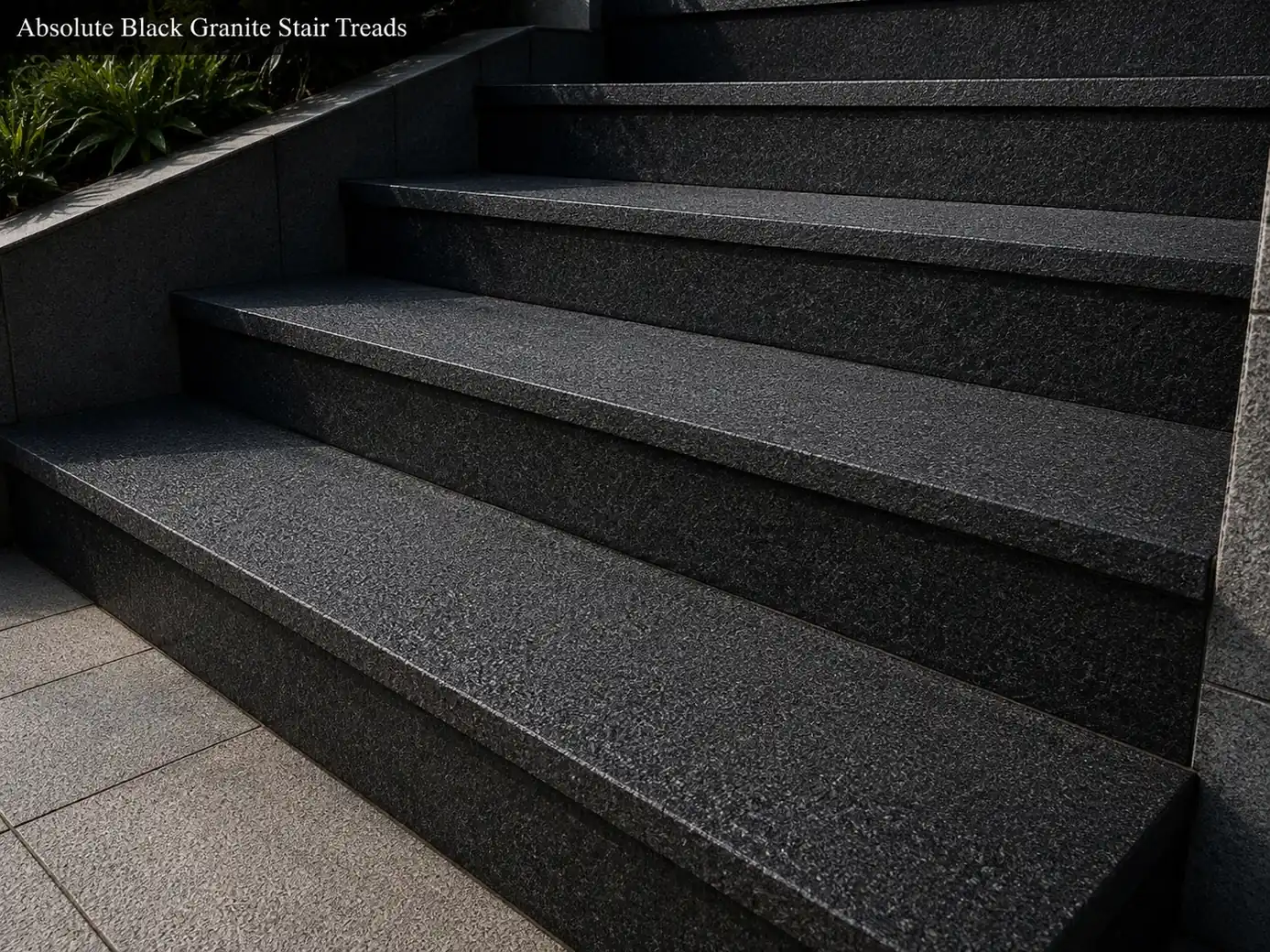
Granite is well suited to stairs because it withstands heavy foot traffic. Polished steps can become slippery, so a granite stairs design often specifies flamed, bush-hammered, sandblasted or otherwise textured treads. Thickness must be engineered around span and support, with approximately 30 mm commonly used for supported stone treads. Sealing depends on stone absorption, and exterior staircases particularly benefit from slip-resistant surfaces and correct drainage.
Granite Stair Performance
Granite Stairs Small
Secure product inquiry
Buy now
Cash on delivery available. Product details are pre-filled below. Owner delivery adds AED 5,000.
Tread Texture & Nosing Options
Durable Stone Steps for Heavy Foot Traffic
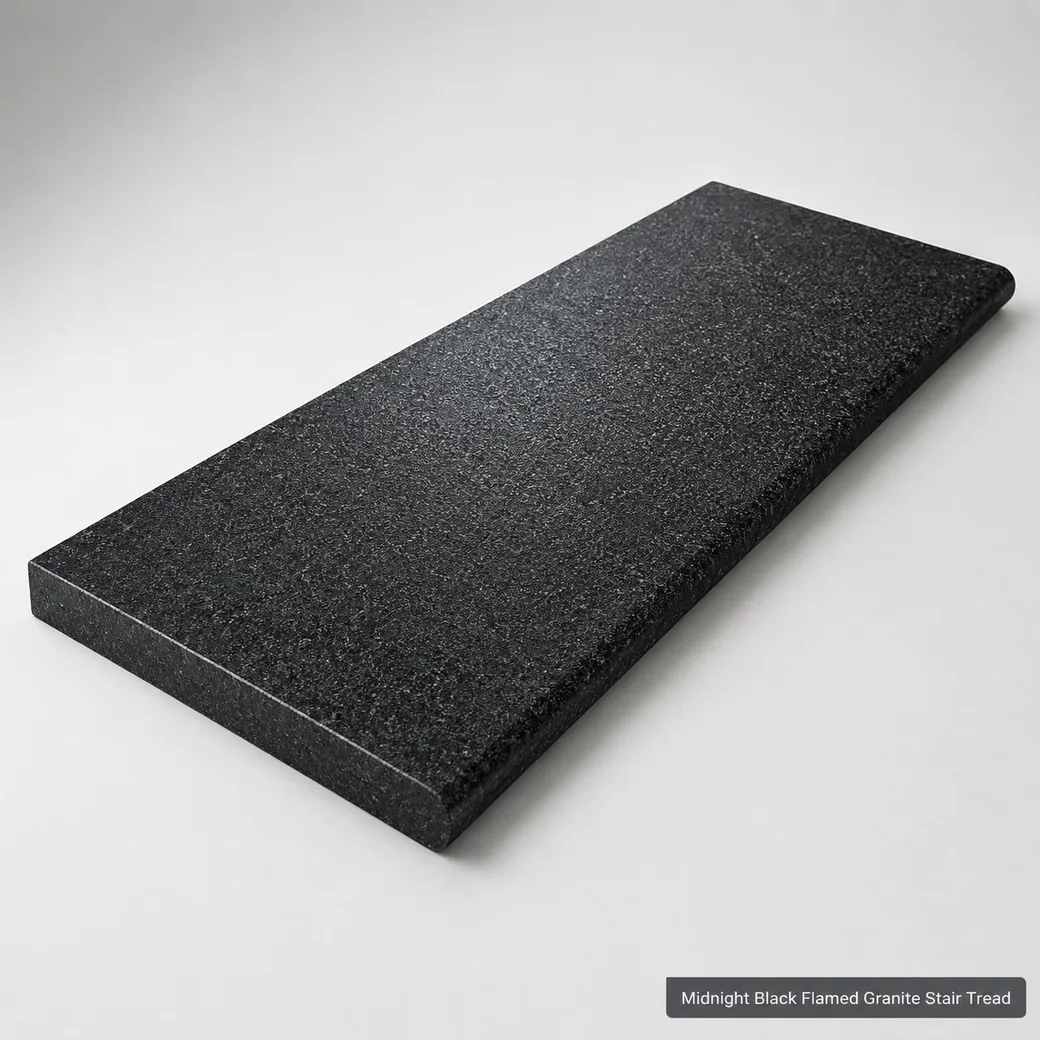
Flamed Absolute Black granite is particularly appropriate where stair grip matters because the thermal treatment creates a textured walking surface. These 90 × 30 × 3 cm treads can be fabricated with straight or custom nosing and coordinated risers. Exterior and high-traffic applications should combine correct tread support, drainage and slip-resistant finishing rather than relying on granite hardness alone.
Heavy-Duty Stair Stone
Black Granite Stair Tread Performance
Black Granite Stair Treads made from Dimension Granite combine a dense midnight-black appearance with a flamed surface specifically suited to demanding circulation areas. The thermal finish creates a textured face rather than a smooth polished one, improving grip for entrances, landings and exterior steps where foot traffic, moisture and weather exposure can make glossy stone less practical. Granite’s natural hardness also allows the tread to tolerate repeated pedestrian use with less surface wear than softer stones, making this format appropriate for both heavily used residential stairs and more intensive commercial or outdoor applications.
Grip, Thickness & Nosing
Flamed Granite Steps for Safer Stairways
Each 90 × 30 × 3 cm Absolute Black granite tread weighs 24.9 kg and uses a substantial 30 mm section suitable for a supported stair application. Riser height, tread width and front-edge fabrication can be customized to the staircase drawings, while the flamed finish provides a textured walking face better suited to traction-sensitive stairs than a highly polished surface.
Honed and Flamed Granite Stair Finishes
The flamed surface creates a coarser walking texture than polished granite, making it better suited to stair traction and exposed or potentially wet conditions.
Granite Stair Nosing Profiles
A lightly eased or chamfered tread edge reduces sharpness and chipping risk while preserving the flamed walking texture close to the nosing.
Natural Stone Staircase for Straight, Spiral or Cantilever Forms
Tread depth, riser height, nosing projection and landing geometry should be resolved from the staircase drawings before the 30 mm granite pieces are cut.
Product Overview
Black Granite Step Product Details
This stair tread uses flamed Absolute Black Dimension Granite in dense midnight black, measuring 90 × 30 × 3 cm and weighing 24.9 kg. The 30 mm textured stone can suit heavy-traffic indoor or exterior stairs; exact nosing detail and matching riser configuration are not specified in the supplied data.
| Nosing Profile | Pencil-round R3–5 mm nosing with anti-slip grooves on the tread edge. |
|---|---|
| Riser Thickness | 20 mm granite riser thickness fixed to a continuous prepared backing |
| Landing Match Availability | Matching landing slabs available from the same block lot, vein- and shade-sequenced with the stair treads |
| Anti-Slip Strip Recess | 40 × 5 mm recessed strip positioned approximately 25 mm behind the tread nosing for a flush anti-slip insert |
| Support Span | Maximum 600 mm clear unsupported span for a 30 mm granite tread unless project-specific structural engineering requires closer support |
| Kerf Detail | Two underside anchor kerfs approximately 5 mm wide × 10 mm deep, positioned to suit the approved stainless-steel support system |
| Edge Radius | R3 mm eased radius on the exposed tread nosing and side edges |
| Dimensional Tolerance | Finished tread and riser dimensions within ±2 mm, with diagonal difference not exceeding 3 mm |
| Joint Width | 3 mm nominal joints between calibrated interior treads and risers |
| Stair Template Reference | Fabricate each numbered tread and riser from an approved full-size site template referenced to the finished staircase datum |
Safety & Maintenance
Maintaining Granite Stair Treads
Select a finish, nosing and anti-slip treatment appropriate to wet or exterior conditions, and provide drainage so water cannot remain on the treads. Seal according to porosity, clean with pH-neutral products and avoid assuming a polished surface is safe simply because granite itself is durable.
High-Traffic Value
Why Choose Flamed Black Granite Stairs
Flamed black granite stairs provide four technical benefits: textured finishing improves traction, dense granite tolerates repeated foot traffic, tread thickness can be engineered around span and support, and each tread or landing can be cut to staircase drawings for consistent dimensions and edge alignment.
- Heavy Traffic Durability
Dense flamed granite withstands repeated foot traffic while maintaining a textured tread surface for demanding stair areas.
- Textured Slip Control
The flamed finish creates a textured tread surface that improves slip control compared with polished granite.
- Custom Nosing Options
Stair edges can be fabricated with custom nosing profiles to suit tread design, safety requirements and architectural detailing.
- Exterior Use Suitable
Flamed Absolute Black granite is suitable for exterior stairs where textured treads and proper drainage are required.
Project Fabrication
Custom Granite Staircase Options
Custom granite staircases can be fabricated with project-specific treads, risers and landings for straight, L-shaped, U-shaped or spiral layouts, with each piece produced from coordinated installation drawings. Stone selection, tread finish and edge profiles such as straight, eased or bullnose should be resolved before cutting, just as dimensional detailing matters when specifying a white marble shower curb.

Technical Reference
Dimension Granite Stair Specifications
Check the stair specifications for nosing profile, riser details and slip-related installation requirements before approving fabrication. These fields help your installer coordinate each tread with the staircase geometry, substrate and intended traffic conditions while determining whether sealing is appropriate.
Product details
Specifications, care, delivery and FAQ
Everything is rendered from product JSON fields so the page remains SEO-ready even before JavaScript runs.
Cleaning: sweep or vacuum abrasive grit frequently, wash flamed treads with diluted pH-neutral stone cleaner, scrub texture using a soft nylon brush, rinse thoroughly, keep drainage channels clear, avoid acids oily cleaners wax and metal brushes
Daily Care: Sweep grit daily, clean spills immediately, wash treads using pH-neutral stone cleaner, keep nosings joints and drainage channels clear, dry wet steps and inspect loose pieces, avoid acids metal brushes wax and slippery polish
- Avoid acidic cleaners
- avoid slippery wax or polish
- avoid leaving grit on treads
- avoid standing water on exterior steps
- avoid installing cracked or inadequately supported pieces
Maintenance: Sweep grit frequently, wash treads with pH-neutral stone cleaner, keep nosings and drainage clear, inspect joints supports and loose pieces, maintain slip resistance, replace worn anti-slip strips or floor mats
Handling: Carry treads vertically with two handlers, support both ends, protect nosings, use compatible suction lifters, store flat on full-length bearers, never lift or lever a tread by one corner
Which nosing profile gives the best practical grip on these flamed Absolute Black granite stairs without creating a vulnerable edge that is more likely to chip?
A small bevel or modest rounded edge is more durable than a thin projecting bullnose on 30 mm flamed granite treads. Retain the flamed texture close to the front, and if additional grip is needed, add shallow antislip grooves or an insert positioned safely behind the nosing rather than deeply weakening the edge. Avoid sharp arrises that chip under impact. The tread must have continuous support and a profile compliant with local stair dimensions, visibility and accessibility requirements, especially on exterior or wet stairs.
Should the granite risers match the textured tread finish, or can a contrasting polished finish be used safely and coherently?
The risers can use a contrasting polished finish because they are not normally walked on, while the treads and nosing should retain the specified textured, slip-resistant finish. Keeping the same granite colour and vein direction across both finishes will create visual coherence without compromising tread safety.
How should granite stair treads be fully bedded during installation to prevent hollow spots, cracking and movement?
Each tread should be installed on a continuous, void-free bed over a stable, level substrate using mortar or adhesive specified for granite. Back-butter the stone, verify complete contact, provide movement joints and support nosings correctly; hollow spots concentrate impact and can cause cracking or debonding under repeated traffic.
Are additional anti-slip grooves necessary on flamed Absolute Black Granite Stairs, or does the tested surface texture already provide sufficient wet and dry slip resistance?
Additional grooves are not automatically necessary on flamed Granite Stairs; the decision should be based on a recognized wet-and-dry slip-resistance test for the finished tread, its slope, drainage and expected footwear. Grooves or contrasting nosing may still be required by local code or beneficial on exterior steps exposed to rain, pool water or oils, but poorly detailed grooves can retain dirt and water rather than improve safety.
Where should movement joints be placed where granite stair treads and risers meet landings, walls and surrounding flooring to prevent cracking or tenting?
Continue movement joints from the substrate through the stone finish at landings, changes of direction, structural breaks and junctions with walls or different flooring. Use flexible sealant over appropriate backing rather than rigid grout, avoid bonding across building joints and follow the project engineer’s spacing and local requirements for long stair runs and exterior thermal exposure.
Reviews
Reviews and new review submission
0.0 average rating from 0 reviews. New reviews are saved as pending until approved.
No approved reviews yet for this product. The review form is ready for buyer submissions.