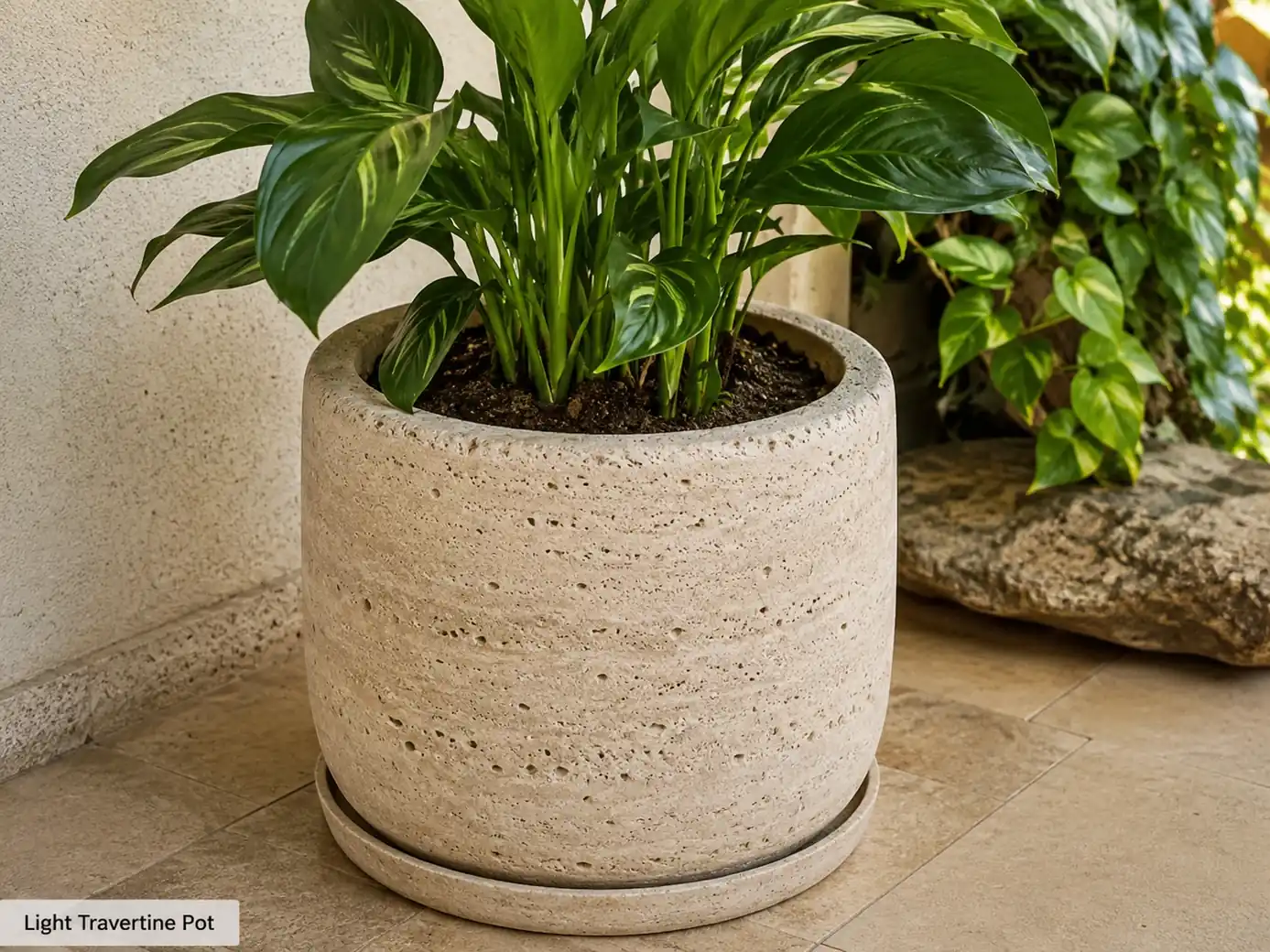
Travertine can be carved into durable plant pots for indoor or sheltered outdoor use. A drainage hole is advisable for live planting unless an internal nursery pot is used, because standing water may stain porous stone. Solid pieces are naturally heavy and stable. Outdoor suitability depends on climate and stone quality; remove mineral deposits gently and wash with pH-neutral cleaner rather than acids.
Natural Stone Planters
Travertine Pot Small
Secure product inquiry
Buy now
Cash on delivery available. Product details are pre-filled below. Owner delivery adds AED 5,000.
Drainage, Liners & Water Care
From Succulents to Statement Planting
This Ø30 × 30 cm solid travertine planter weighs 18 kg, giving it greater stability than lightweight ceramic or resin alternatives. Direct planting should use a drainage opening to prevent prolonged water saturation, while an internal nursery pot or liner offers better control indoors. Its natural pores and cavities suit Mediterranean and organic interiors but also require careful water management to reduce staining.
Natural Stone Planting
Ivory Travertine Planter Pot
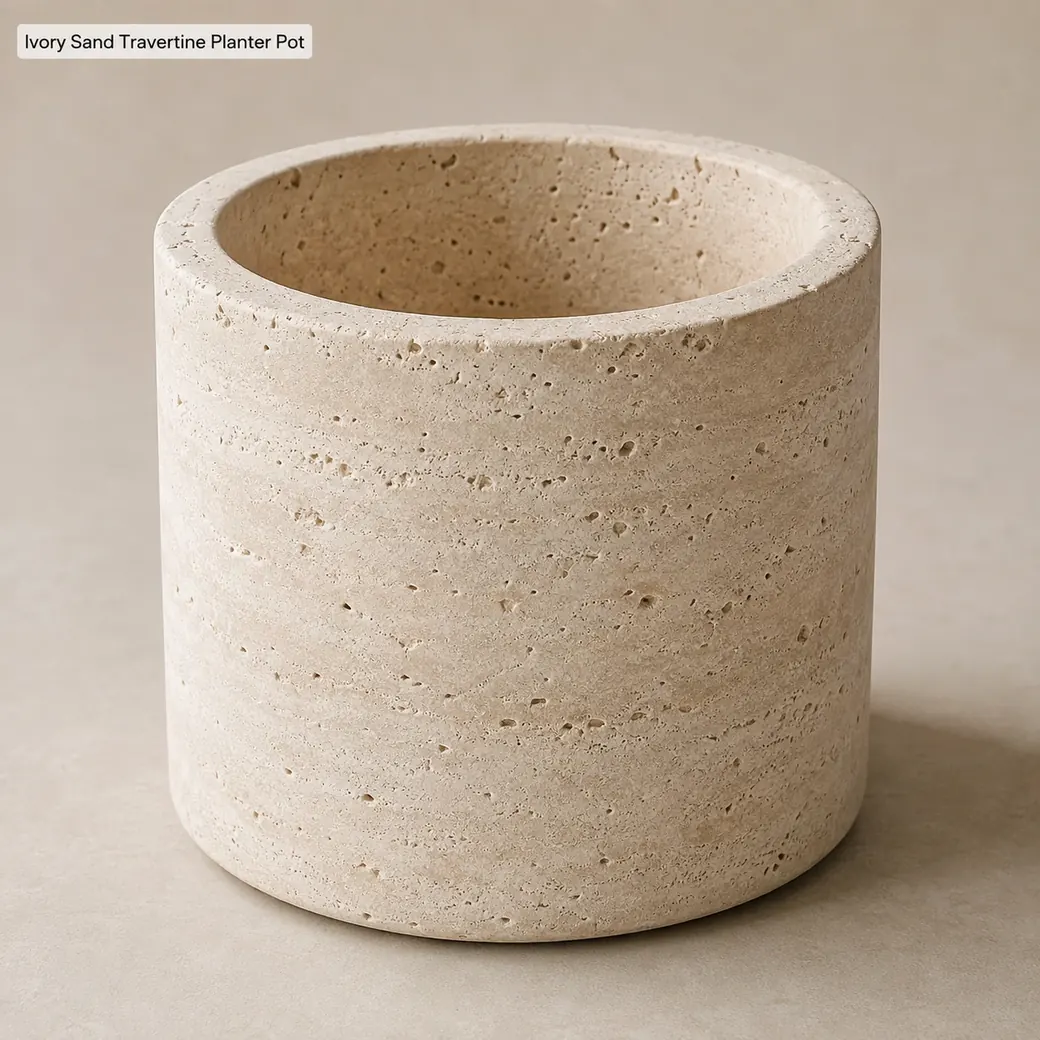
The Ivory Travertine Planter Pot is a Ø30 × 30 cm carved natural-stone container designed for indoor planting or sheltered exterior use. Its sanded light travertine has an ivory-sand tone that works easily with foliage and neutral architectural finishes without overpowering the planting itself. At 18 kg, the pot has considerably more stability than lightweight decorative planters, making it particularly suitable for permanent greenery arrangements in living spaces, covered terraces, entrances or hospitality interiors.
Planting Setup
How to Use a Travertine Plant Pot
For the Ø30 × 30 cm travertine pot, direct planting is practical only when water can drain properly and the stone is protected from prolonged saturation. A removable nursery pot gives easier watering, repotting and cleaning while keeping wet soil away from the stone interior; if planting directly, include a drainage opening and avoid allowing water to remain trapped at the base.
Plan Drainage in a Stone Planter
Live planting generally needs a drainage hole to prevent saturated soil and standing water unless the travertine pot is used with a separate watertight nursery liner.
Prevent Moisture Marks on Travertine Flower Pots
Use a saucer or internal liner where needed and wipe standing water around the 18 kg pot promptly to limit moisture marks on both travertine and flooring.
Position a Natural Stone Planter Outside
Place the travertine planter outdoors only where the stone quality and local climate are suitable, with sheltered exposure preferred where weathering is severe.
Product Data
Ivory Travertine Planter Product Details
This small planter uses sanded Porous Light Travertine in ivory sand. Its Ø30 × 30 cm body weighs 18 kg and is suitable for planting when drainage is provided; where no direct drain is used, the source supports placing a separate nursery pot or liner inside.
| Internal Planting Diameter | Approx. Ø24 cm internal planting diameter |
|---|---|
| Usable Soil Volume | Approx. 11 L usable soil volume within the Ø24 cm planting cavity |
| Wall Thickness | Approx. 30 mm carved-stone wall thickness around the Ø24 cm planting cavity |
| Base Thickness | Approx. 40 mm solid-stone base thickness beneath the planting cavity |
| Rim Profile | R5 mm eased outer rim with a softly rounded inner lip to reduce edge chipping |
| Root-Ball Clearance | Minimum 30 mm radial clearance between the nursery root ball and the internal stone wall |
| Liner Clearance | Minimum 10 mm clearance around the removable internal nursery-pot liner |
| Saucer Compatibility | Compatible with a minimum Ø32 cm waterproof saucer, providing approximately 10 mm clearance around the pot base |
| Bottom Contact Footprint | Approx. Ø22 cm flat bottom-contact footprint beneath the Ø30 cm pot |
| Lifting Provision | Two opposed concealed hand recesses below the rim for controlled two-person lifting; mechanical handling required when planted weight exceeds safe manual limits |
Custom Garden Stonework
Bespoke Travertine Planter Options
Bespoke planters can be carved as round pots, square cubes, shallow bowls or elongated planter boxes in dimensions suited to the selected plant and root ball. Drainage openings, internal liners, wall thickness and mechanical-handling requirements should be coordinated with the finished planted weight.
Plant Display Benefits
Why Choose a Solid Stone Flower Pot
A solid stone flower pot offers high stability for larger plants and decorative arrangements, making it less prone to tipping than lightweight planters. Travertine can be used indoors or in sheltered outdoor settings, drainage can be incorporated for live planting, and the carved stone body gives entrances, terraces and landscaped areas a more permanent architectural appearance.
- Heavy Stable Planter
The 18 kg solid travertine body gives the planter strong stability for indoor or sheltered outdoor planting.
- Optional Drainage Hole
An optional drainage hole allows excess water to escape when the travertine pot is used for direct live planting.
- Natural Porous Texture
Natural pores and subtle cavities remain visible across the sanded travertine, giving the planter genuine stone texture.
- Indoor Outdoor Options
The solid travertine planter can suit indoor spaces or sheltered outdoor settings when drainage and local exposure are properly considered.
Water & Stone Care
Maintaining a Travertine Garden Planter
Remove mineral deposits from the travertine planter gently with pH-neutral stone products rather than acidic descalers, and consider sealing only where absorption, soil staining or exposure makes it useful. Protect interior floors beneath the 18 kg pot from trapped moisture or grit, especially when direct planting is used; understanding the difference between granite and marble also helps explain why care methods should be matched to the specific stone.

Technical Specification
Travertine Planter Specifications
Check the planter specifications for drainage provision, liner requirements and intended placement before adding live plants. These fields help you decide whether to plant directly into the stone, use a removable nursery pot or prepare floor protection for the selected location.
Product details
Specifications, care, delivery and FAQ
Everything is rendered from product JSON fields so the page remains SEO-ready even before JavaScript runs.
Cleaning: Remove loose soil with a soft dry brush, wash mineral and soil marks using pH-neutral stone cleaner and a soft nylon brush, rinse and dry thoroughly, clean the drainage tray separately, avoid acidic limescale removers wire brushes bleach and standing water
Daily Care: Use a watertight liner or drainage tray indoors, remove soil and mineral residue promptly, wipe sanded travertine with pH-neutral stone cleaner, keep the base dry, clear drainage holes regularly, avoid acids metal brushes and standing water
- Avoid planting directly without drainage planning
- avoid standing water beneath the pot
- avoid acidic mineral removers
- avoid dragging the 18 kg pot across flooring
- avoid exposing unsuitable stone to severe weather
Maintenance: Use a waterproof liner or drainage tray indoors, keep drainage holes clear, remove soil and mineral residue promptly, clean with pH-neutral stone cleaner, dry the base regularly, inspect cracks and floor pads before repositioning
Handling: Empty soil and water before moving where possible, use two people for the 18 kg pot, lift beneath the base, protect the rim and drainage opening, place on a padded trolley, never drag it across indoor flooring
Is it better to plant directly inside this porous travertine pot with drainage, or use a removable nursery liner to reduce moisture staining and simplify plant maintenance?
Use a removable watertight nursery liner for most live plants. It prevents continuously wet soil from contacting porous Travertine, reduces dark moisture marks and mineral deposits, and makes repotting or drainage maintenance easier. Keep the inner pot raised slightly, provide drainage into a removable saucer and never allow water to remain trapped inside the stone pot. Direct planting is possible only when drainage holes, waterproof internal treatment and the plant’s irrigation requirements are purpose-designed, but it creates greater long-term staining and maintenance risk.
How many drainage holes should this 11-litre travertine planter have to prevent retained water without weakening its stone base?
An 11-litre planter of this size normally benefits from three to five drainage holes approximately 10–15 mm in diameter, distributed across the base rather than concentrated near one edge. The exact number depends on the plant, soil and use of an internal liner. Keep holes well away from the perimeter and natural cavities, use rounded diamond-drilled openings and retain adequate stone thickness between them. A removable nursery pot remains safer because repeated drilling and continuously wet soil can weaken or stain porous Travertine.
Can roots, damp soil or fertilizer permanently darken the inside of this porous travertine pot, and should it use a removable liner?
Yes, persistent moisture, fertilizer salts and organic matter can darken or stain porous travertine and create deposits around drainage paths. Use a removable non-reactive planter liner with drainage and an air gap, keep runoff from sitting inside the stone shell and avoid sealing moisture between the liner and travertine.
What drainage tray, waterproof liner or raised-foot system should be used beneath the Travertine Pot to stop water and mineral residue from damaging indoor timber or stone floors?
Use a watertight removable nursery liner with its own drainage, placed above a deep waterproof saucer large enough to catch overflow. Raise the 18 kg pot on broad non-staining silicone or EPDM feet so air circulates and trapped water is visible; on timber, add a rigid moisture barrier beneath the saucer and empty runoff promptly rather than relying on sealer alone.
Can this porous travertine planter remain outdoors throughout the year, and how will rain, intense heat, irrigation salts and seasonal temperature changes affect it?
It can remain outdoors year-round only when the stone grade, drainage, liner and climate exposure are suitable. Rain and irrigation salts may darken or mark pores, intense heat affects sealers and filled areas and freeze-thaw climates can cause damage if water remains inside; provide drainage, raised feet and seasonal protection appropriate to the location.
Reviews
Reviews and new review submission
0.0 average rating from 0 reviews. New reviews are saved as pending until approved.
No approved reviews yet for this product. The review form is ready for buyer submissions.